
 EN
EN


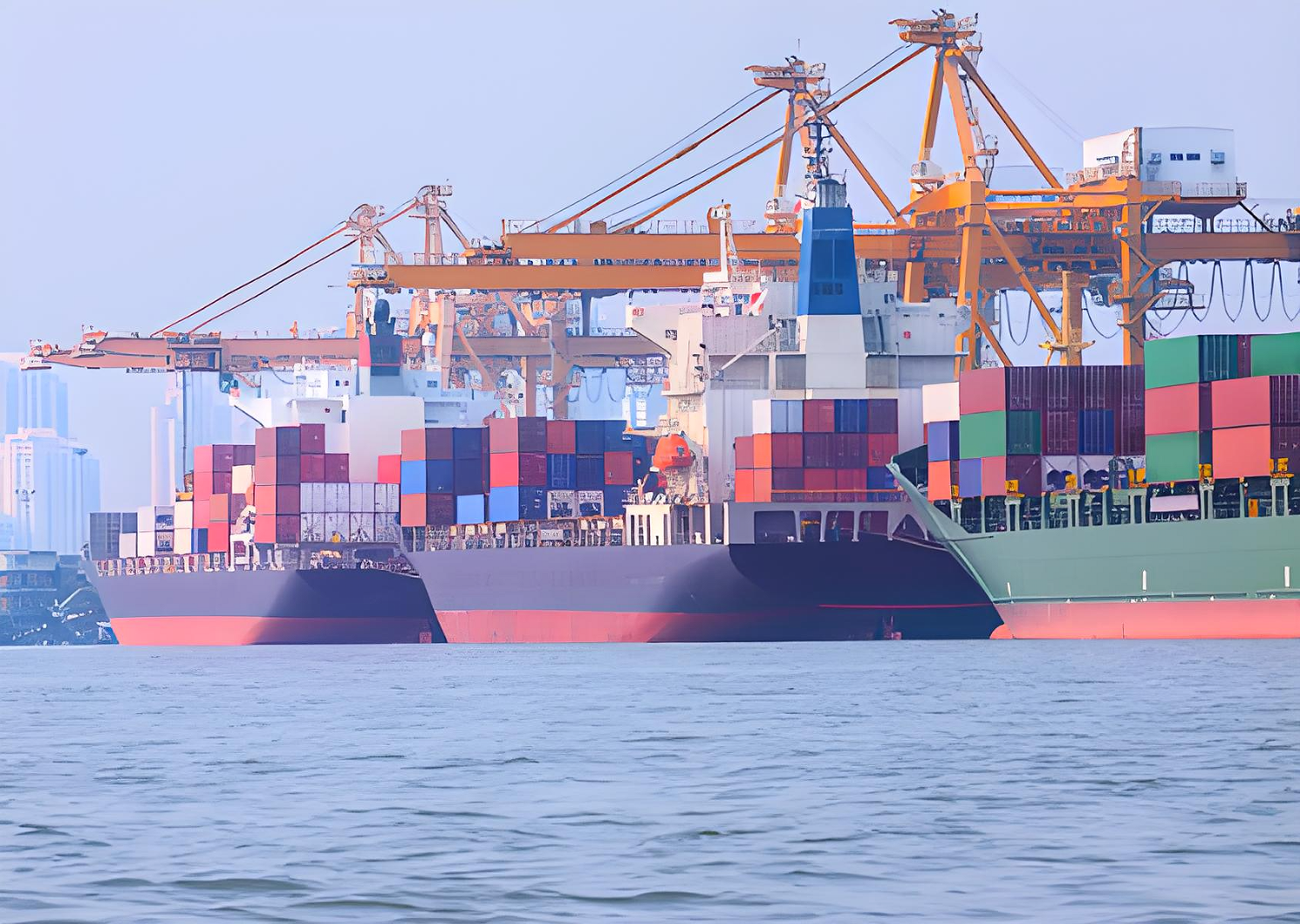
Choosing the right door to door sea shipping provider is one of the most consequential logistics decisions a business can make. Unlike standard freight arrangements where responsibility is handed off at the port, door to door sea shipping covers the entire journey — from the supplier's warehouse to the buyer's facility — under a single service umbrella. That end-to-end scope means that a provider's weaknesses at any stage of the chain become your operational problem. Businesses that evaluate providers carefully before committing tend to experience fewer delays, lower hidden costs, and stronger supply chain reliability over time.

The evaluation process for door to door sea shipping providers is not simply about comparing price quotes. It requires a structured assessment of operational capability, geographic reach, customs expertise, communication standards, and risk management practices. Businesses that treat this as a purely transactional decision often find themselves locked into service agreements that underperform when volumes scale or when unexpected disruptions occur. This article outlines the key dimensions businesses should examine when selecting a door to door sea shipping partner, and explains why each dimension matters in practice.
Understanding What Door to Door Sea Shipping Actually Covers
The Full Scope of Service Responsibility
Before evaluating any provider, businesses need a clear understanding of what door to door sea shipping is supposed to include. At its core, this service model means the provider takes responsibility for cargo pickup at the origin location, inland transportation to the departure port, ocean freight, destination port handling, customs clearance at both ends, and final-mile delivery to the consignee's address. Each of these stages involves different subcontractors, regulatory requirements, and logistical variables.
A provider that genuinely controls or tightly manages all these stages offers a fundamentally different value proposition than one that simply brokers the ocean leg and outsources everything else. When evaluating door to door sea shipping providers, businesses should ask for a detailed breakdown of which stages the provider handles directly and which are subcontracted. The answer reveals how much operational control the provider actually has over your shipment's journey.
Providers with strong in-house capabilities at both origin and destination tend to deliver more consistent service because they are not dependent on third-party performance at critical handoff points. This is especially important for time-sensitive cargo or shipments moving through congested trade lanes where coordination failures are costly.
How Service Scope Affects Pricing Transparency
The scope of door to door sea shipping directly determines how pricing should be structured and communicated. A comprehensive provider should be able to offer an all-inclusive quote that covers origin charges, ocean freight, destination handling, customs duties, and delivery fees. Quotes that exclude certain stages — or that list them as estimates — are a signal that the provider does not fully control those components.
Businesses should request itemized quotes and ask specifically which charges are fixed and which are subject to adjustment. Fuel surcharges, port congestion fees, and customs examination costs are common variables, but a reputable door to door sea shipping provider will explain these clearly rather than presenting them as surprises after the shipment is in transit.
Pricing transparency is not just a financial concern — it is an indicator of how the provider manages information and communicates with clients. Providers that are clear about cost structures tend to be equally clear about shipment status, delays, and exceptions, which matters enormously when managing customer commitments downstream.
Assessing Operational Capability and Network Strength
Geographic Coverage and Port Relationships
Door to door sea shipping performance depends heavily on the provider's actual network at both origin and destination. A provider with strong relationships at major ports, established customs brokerage licenses in key markets, and reliable inland carrier partnerships will consistently outperform one that assembles ad hoc solutions for each shipment. When evaluating providers, businesses should ask about the specific trade lanes they serve regularly, not just the lanes they claim to cover.
Port relationships matter because they affect how quickly cargo moves through terminal operations, how efficiently documentation is processed, and how well the provider can respond when congestion or equipment shortages occur. Providers that handle significant volume through specific ports tend to have better access to vessel space, faster customs clearance times, and more reliable delivery windows on the destination side.
For businesses shipping to or from markets with complex customs environments — such as certain Southeast Asian, South American, or African destinations — the provider's local presence and regulatory knowledge become especially critical components of door to door sea shipping quality.
Carrier Relationships and Vessel Space Access
The ocean freight component of door to door sea shipping is only as reliable as the provider's access to vessel space. Providers that have contracted space agreements with major ocean carriers can offer more consistent booking availability and more stable transit times than those that rely entirely on spot market bookings. During periods of high demand or capacity constraints, this distinction becomes the difference between on-time delivery and multi-week delays.
Businesses should ask providers about their carrier relationships and how they secure space during peak seasons. A provider that can demonstrate consistent booking performance across different market conditions is demonstrating genuine operational depth, not just favorable conditions during a sales conversation.
It is also worth asking whether the provider offers both FCL and LCL options within their door to door sea shipping service. Businesses with variable shipment sizes benefit from providers that can accommodate both full container loads and consolidated cargo without requiring separate service arrangements.
Evaluating Customs Expertise and Compliance Capability
Why Customs Competence Is Central to Door to Door Performance
Customs clearance is one of the most technically demanding stages of door to door sea shipping, and it is also one of the most common sources of delays and unexpected costs. A provider with strong customs expertise can classify goods correctly, prepare documentation accurately, anticipate regulatory requirements in destination markets, and resolve examination or hold situations efficiently. A provider without this expertise creates risk at every customs touchpoint.
When evaluating door to door sea shipping providers, businesses should ask whether the provider holds customs brokerage licenses in the relevant markets, how they handle HS code classification, and what their process is for managing customs examinations or compliance queries. Providers that have dedicated customs teams rather than relying entirely on third-party brokers tend to offer faster resolution times and better documentation accuracy.
For businesses importing regulated goods — such as food products, chemicals, electronics, or medical equipment — customs competence is not optional. The provider's ability to navigate import permits, product certifications, and inspection requirements is a direct determinant of whether door to door sea shipping actually delivers goods on schedule.
Documentation Management and Error Prevention
Documentation errors are a leading cause of customs delays in international sea freight. Bills of lading, commercial invoices, packing lists, certificates of origin, and import permits must all be accurate, consistent, and submitted within required timeframes. A door to door sea shipping provider that has robust documentation management processes — including pre-shipment document review and digital tracking of filing status — significantly reduces the risk of clearance delays caused by paperwork issues.
Businesses should ask providers how they manage document collection from shippers, how they verify accuracy before submission, and what their process is when errors are identified after filing. Providers that have clear answers to these questions have clearly thought through the documentation workflow, which is a positive indicator of overall operational maturity.
The quality of documentation management also affects duty calculations and trade compliance. Incorrect valuations or misclassified goods can result in underpayment or overpayment of duties, both of which create downstream complications. A competent door to door sea shipping provider treats documentation as a core service component, not an administrative afterthought.
Communication Standards and Shipment Visibility
Real-Time Tracking and Status Reporting
One of the most practical differentiators among door to door sea shipping providers is the quality of shipment visibility they offer. Businesses managing supply chains need to know where their cargo is at each stage of the journey — not just when it departs and when it arrives. Providers that offer real-time tracking platforms, proactive status updates, and milestone notifications give their clients the information needed to manage inventory planning, customer commitments, and exception responses effectively.
When evaluating providers, businesses should request a demonstration of the tracking tools available and ask how updates are generated — whether through direct carrier data feeds, manual updates, or automated system integrations. Providers that rely heavily on manual status updates tend to have slower and less accurate visibility, which creates uncertainty during critical shipment windows.
Visibility is particularly important in door to door sea shipping because the service spans multiple modes and multiple parties. A provider that can consolidate status information across the inland pickup, ocean transit, port handling, and final delivery stages into a single view is offering genuine operational transparency, not just a tracking number.
Responsiveness and Exception Handling
Even well-managed door to door sea shipping shipments encounter exceptions — weather delays, port congestion, customs holds, or vehicle breakdowns on the final mile. What separates strong providers from weak ones is not the absence of exceptions but the quality of their response when exceptions occur. Businesses should evaluate how quickly a provider communicates problems, what options they present for resolution, and how proactively they manage the downstream impact on delivery schedules.
During the evaluation process, it is reasonable to ask providers for examples of how they have handled specific disruption scenarios. Providers that can describe concrete cases — including what went wrong, how they communicated with the client, and what steps they took to recover — are demonstrating genuine operational experience rather than theoretical capability.
Responsiveness also applies to routine inquiries. A provider that takes days to respond to a quote request or a documentation question is unlikely to perform better when a shipment is in crisis. Communication speed and quality during the sales process is a reasonable proxy for service quality during active shipments.
Risk Management, Insurance, and Contractual Clarity
Cargo Insurance and Liability Coverage
Door to door sea shipping involves significant cargo value moving across multiple jurisdictions and transport modes. Understanding how liability is allocated — and what insurance coverage is available — is an essential part of provider evaluation. Standard carrier liability under international conventions is typically limited and may not reflect the actual commercial value of the goods being shipped. Businesses should ask providers what cargo insurance options they offer and whether all-risk coverage is available for the full door to door journey.
Providers that offer integrated cargo insurance as part of their door to door sea shipping service simplify the claims process significantly. When a single provider covers the entire journey under one insurance policy, there is no ambiguity about which party's coverage applies when damage or loss occurs at a specific stage. This is a meaningful operational advantage compared to arrangements where insurance is fragmented across multiple carriers and subcontractors.
Businesses should also review the claims process before committing to a provider. A provider with a clear, documented claims procedure and a track record of resolving claims fairly is demonstrating that they take cargo protection seriously as a service commitment, not just as a contractual formality.
Contract Terms and Service Level Commitments
The contractual framework governing a door to door sea shipping relationship should clearly define service scope, transit time commitments, liability limits, dispute resolution procedures, and the conditions under which rates can be adjusted. Businesses should review these terms carefully before signing and should be cautious of agreements that are heavily weighted toward protecting the provider at the expense of the shipper.
Service level agreements that include specific transit time windows, communication response standards, and escalation procedures give businesses a basis for holding providers accountable. Providers that resist including measurable commitments in their contracts are signaling that they do not expect to be held to specific performance standards, which is a meaningful red flag in a door to door sea shipping evaluation.
Volume commitments, rate validity periods, and surcharge adjustment mechanisms should also be clearly defined. Businesses that ship regularly benefit from rate stability and predictable cost structures, and a well-structured contract is the mechanism through which that stability is secured.
FAQ
What is the most important factor when evaluating a door to door sea shipping provider?
Operational capability and network depth are the most critical factors. A provider that genuinely controls or tightly manages each stage of the door to door sea shipping journey — from origin pickup through customs clearance to final delivery — will consistently outperform one that brokers components without real oversight. Pricing matters, but a low quote from a provider with weak operational control often results in higher total costs through delays, errors, and exception handling failures.
How can businesses verify a provider's customs expertise before committing?
Businesses should ask for evidence of customs brokerage licenses in the relevant markets, request examples of how the provider has handled complex clearance situations, and ask specifically about their process for HS code classification and documentation review. Providers with genuine customs expertise will answer these questions with specificity. Vague or generic responses are a signal that customs handling may be outsourced without meaningful oversight, which creates risk in door to door sea shipping operations.
Is door to door sea shipping suitable for all cargo types and trade lanes?
Door to door sea shipping is well-suited for a wide range of cargo types and trade lanes, but suitability depends on the provider's specific network and capabilities. For regulated goods, hazardous materials, or shipments moving through markets with complex import requirements, businesses need to confirm that the provider has the necessary licenses, certifications, and local expertise. Not all providers offering door to door sea shipping have equal capability across all markets, so trade-lane-specific evaluation is important.
How should businesses assess a provider's performance during disruptions?
The best approach is to ask for specific case examples during the evaluation process. Request that the provider describe a recent situation where a door to door sea shipping shipment encountered a significant disruption — such as a port delay, customs hold, or final-mile failure — and explain how they communicated with the client and resolved the issue. Providers with strong exception management capabilities will have clear, detailed answers. Those without real experience managing disruptions will struggle to provide concrete examples.
Table of Contents
- Understanding What Door to Door Sea Shipping Actually Covers
- Assessing Operational Capability and Network Strength
- Evaluating Customs Expertise and Compliance Capability
- Communication Standards and Shipment Visibility
- Risk Management, Insurance, and Contractual Clarity
-
FAQ
- What is the most important factor when evaluating a door to door sea shipping provider?
- How can businesses verify a provider's customs expertise before committing?
- Is door to door sea shipping suitable for all cargo types and trade lanes?
- How should businesses assess a provider's performance during disruptions?